Kate’s mother’s loan documents
Slow BurnKate’s mother’s loan documents are the paper trail through which Kate MacKenna discovers that Leah MacKenna’s financial crisis was bound up with the final year of her illness. Read alongside hospital bills and receipts, the papers transform an abstract account of debt into evidence of what Leah endured and what she chose to bear alone: after her insurance ran out, she signed away everything so her daughters would not be left with her debt.
Discovery and context
The documents surface while Kate is discussing her company’s financial troubles with Nate Hallinger. She dislikes having to explain the situation, but tells him about the mess she has found; Nate is particularly interested in the loan’s terms. That interest makes the paperwork relevant not only to Kate’s family history but also to the current financial problem she is trying to understand. The available account does not specify the terms themselves, so the documents’ importance lies less in any disclosed figures than in the questions they prompt and the history Kate uncovers by examining them.
Later, Kate retrieves a briefcase and takes out two folders. One contains the loan papers Leah signed; the other comes from a hospital. Kate says that during the last year of her life, Leah spent more time in hospitals than at home. Placing these records together gives the documents their context: the loan cannot be read in isolation from the medical bills and the period of illness against which Leah was trying to provide for her daughters.
Reading the record
Kate spends twenty minutes reading each paper, bill, and receipt. The deliberate, item-by-item examination marks a change from having merely found a financial problem to understanding how it arose. The folders do not offer a single summary; their combined contents allow Kate to reconstruct the circumstances. She learns that Leah’s limited insurance had run out and that, in desperation, she signed away everything so her daughters would not be saddled with her debt.
The hospital bills are described as astronomical. Their scale gives substance to the strain behind the loans without supplying a total or specifying the arrangements. The records also establish the duration and intimacy of the crisis: Leah was frequently in hospital during her final year, while the bills and receipts preserve the accumulating costs that Kate reads through one by one. The documents therefore function as more than proof that money was owed. Together, they connect the family’s financial predicament to Leah’s illness and to the decisions she made when her insurance no longer covered what she needed.
What the documents reveal
The papers overturn the possibility of reading Leah’s financial choices simply as a burden passed down to her daughters. Kate discovers that Leah incurred or accepted obligations in a desperate effort to prevent that very outcome. The documents reveal a sacrifice, but not one Leah explained to her family while it was happening. Kate realizes how much Leah must have worried and that she kept her fear and heartache to herself, telling no one.
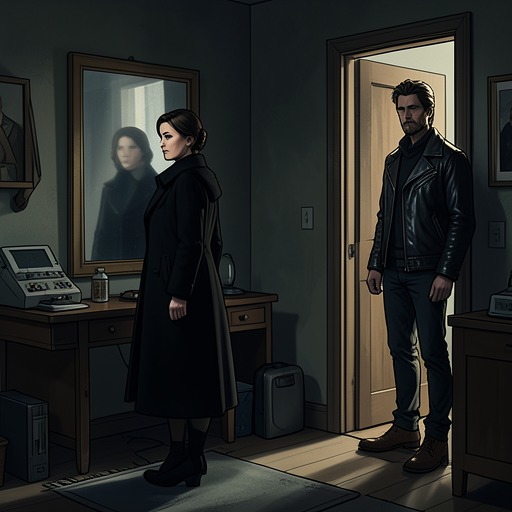
That silence matters to Kate’s response. As she reads, tears cloud her vision; she turns away from Dylan Buchanan so he will not notice and wipes her face with a tissue. Her distress accompanies the discovery that the financial mess has a concealed personal history. The papers make that history legible, but cannot undo the secrecy or the costs that produced it.
Narrative significance
The loan documents join two strands of the story that might otherwise remain separate: the immediate threat to Kate’s company and her grief and anger over her mother. Nate’s attention to the loan terms frames the records as part of a present-day financial investigation; Kate’s reading of the hospital folder, bills, and receipts reveals the family experience behind the numbers. The same papers that invite scrutiny of the loan also lead her to a more compassionate understanding of Leah’s circumstances.
Their significance rests in this shift of perspective. Before Kate reads the complete record, the debt is a financial problem she has discovered; afterward, it is also evidence of her mother’s illness, exhausted insurance, and protective but unspoken choice. The documents do not erase the financial consequences for Kate and her sisters. They change what those consequences mean by showing that Leah’s actions were directed toward shielding her daughters, even as she kept the fear and sacrifice behind those actions from them.